145
Does the Good
Christian Obey the Government?
Ann Wansbrough
Read
Romans 13:1-6
When we first look at this passage, it seems simple. It tells us to be obedient. A good Christian who is a good citizen will be obedient.
What happens when we start with that as our principle for responding to reality, our hermeneutic, and move to the next stage of Segundo's circle: experiencing and interpreting reality? Let us look at some of the situations we have been discussing in this consultation:
* In Australia, aboriginal people find that they are the victims not only of past invasion, but also of continuing racism in the present. They still suffer from the effects of past genocidal policies. They still experience injustice from police and courts. Aboriginal people are still dying because of the injustice.
* In New Caledonia, 6000 French troops keep order over the people of the land.
____________________
This Bible Study makes use of the hermeneutical circle, the method of
relating theology and reality. It was conducted at the 1989 Pacific
Consultation.
146
* In West Papua (Irian Jaya), there has been the take-over by Indonesia (people of a different cultural group), invasion by Indonesian troops, destruction of local culture and traditional land rights and economic exploitation. This can only be described as genocide.
* In Fiji, a properly elected government has been removed by force and military force is being used to maintain a particular group in power.
In all these situations, government is abusing human rights. Can we simply be obedient to such governments? In many ways, people tell us that that is what we should do.
1. By absolutizing the rights of one group of people.
In Fiji, the rights of indigenous people are used as an excuse for the coups and use of military power. I find this difficult. In Australia, it is important that the church stand with aboriginal people, supporting their demand for indigenous rights. But as we look at Fiji, we are left wondering about the rightness of a situation which takes indigenous rights so seriously that the Indian Fijians are deprived of their human rights.
Perhaps this means that no human rights are absolute; that is, no one human right should be made more important than other human rights, so that actions done in the name of that right cannot be questioned. What is happening in Fiji seems to be that the current rulers have absolutized one human right – the right of indigenous people – and forgotten that non-indigenous people have human rights as well.
2. Often we are told that only some people are fit to be rulers.
In Australia, a few years ago, we had a conspiracy to remove a properly elected government. It was a political coup, not
147
a military coup, but it was based on the idea that one party had more right to rule than the other.
It appears that in Fiji, some chiefs are saying that they are the proper rulers and that no one else knows how to rule. They say that because Dr. Bavandra is a commoner, he does not know how to rule.
The French seem to rule in the Pacific with an arrogance, which assumes they have the right to rule other lands and the indigenous people of those lands.
There are people in many countries who like democracy when it gives them the power, but say, "The will of the people can be wrong," when the people give someone else the power.
3. People often try to persuade us to "obey the rulers, no matter what," by telling us that God is God of order, and God supports the hierarchy, and we must do as we are told.
In Germany in the 1930s and 1940s, that sort of outlook meant that fifteen million people were killed in concentration camps and gas chambers. There was almost no protest. A German theologian, Dorothee Solle, in a book called Beyond Mere Obedience, has described how this was able to happen because the German church had such strong teaching about obedience. People were trained to be absolutely obedient. A good Christian gentleman was someone who was obedient to his superiors. The excuse given by many Germans for their role in these atrocities was that they were being obedient.
In many parts of the world - the Pacific, Asia, South Africa, Latin America, Europe, and the Middle East - we find government and religion telling people to be obedient even when it means condoning military violence. It leads to people suffering, living in fear and being killed. It leads to censorship and to people informing
148
on one another. It allows some people to profit, to increase their power and their wealth, while others lose everything.
The problem is that it is easy to see this when it happens in some situations, but not in others. It is easy to see the injustice of European colonialism. But there are many other groups who engage in racial and tribal colonialism.
So we have to ask the question: Do we believe in and do we experience the God who is presented in this ideology of obedience? Do we really believe in the God of order and control, who demands obedience of us no matter what? Do we believe in a God who demands that people must obey the government even when that government deprives them of power, freedom and livelihood?
I believe in the God of grace, the God of community, the God who redeems the whole world, the God who treats slaves the same as masters, the God who breaks down the barriers between people. If we believe in that God, then surely there is something other than obedience to which we are called.
The Exodus story is very helpful. It is the story of what God did when God's people were enslaved and exploited by an unjust government. In reading it, we need to recognize that stories are not like doctrinal statements. People draw different conclusions from stories depending on their experience and situation. As I have pointed out in previous studies, as we use the hermeneutic circle, we will find that the Bible takes on new meanings.
We need to be careful in interpreting stories. There are three principles we need to remember.
1. Human beings and their struggles have not changed. We can discover something about our own story/history from the biblical story. However, we cannot assume that the biblical story is simply an earlier version of our own story.
149
For example, in Australia, there are many people who say that it was right for the British to invade Australia 200 years ago, and that the things that have been done to the indigenous people are acceptable. There are some people in Australian churches who say things like: "Well, you know God helped the Israelites invade the land of Canaan, so God allows people to invade other nations. The British beat the aborigines because God was on the side of the British."
But when we go back and look at the story of the invasion of Canaan, we have to ask: who were these people whom God helped? They were people who had no place in the world to call their own. God enabled them to find a place in which to live. The point is much more likely to be that God thinks that all people have a right to some place to live in freedom, than that God supports military invasion or people riding roughshod over one another using military might.
What we need to do with biblical stories is to read the story and get a general impression of what we think it is about. Then we need to test that interpretation by looking at the historic context and at other parts of the Bible about similar themes. We should use the hermeneutic circle to test our interpretation. In other words, we should apply exegetical suspicion to our own interpretations and to what other people tell us! We should be aware that we have our own ideologies, which influence the way we interpret the Bible.
2. Reading the Bible is a matter of spirituality. It is not simply an intellectual exercise. It involves having an attitude, which says to God, "We want you to take the scriptures and to help us understand our own lives better and the life of the community, the nation and the world. We want to understand better, even if it means giving up some of our ideas." We need to be open to God speaking as we apply the hermeneutic circle.
150
If our interpretation of a biblical passage is basically correct, then as we use the circle, we will find we make more and more sense of the story. Whereas if we are on the wrong track, then the story will seem pretty odd to us and will not seem to fit with anything else.
3. The whole point of Segundo's method is that we can never say: "I've studied that passage. Now I know all about it." If we take the hermeneutic circle seriously, we will always approach the Bible with an open mind, even when we are dealing with a very familiar passage.
Read
Exodus 1:6-14
In this story, one race was afraid of another race. The Egyptians decided that the only way to deal with their fear was to oppress the people they were afraid of. Racial tension leads to exploitation. But the slavery does not solve anything. The rest of the story tells us that the Israelites went on being strong. The more laboring they had to do, the more the problem grew.
Read
Exodus 1:15-22
The Egyptians find that the slavery does not stop their fear. So now, they try genocide. They seemed to say: "If we kill off these people, we will be alright."
We can find many similar stories in the Pacific. Australian aborigines point to government policies in the last 200 years, which seemed designed to kill their race, and see police harassment as the more subtle continuation of the same policies. The Indonesian policy in West Papua is genocidal. But we should not pick on one or two countries. When I attended a conference of Asian women in 1987, we represented 16 different Asian countries. We found that there was racial oppression in every one of our countries. We also found racial oppression between countries. Racist attitudes and
151
genocide are common throughout the world.
The Israelites find that their life as a race is at stake. Their whole race could be deprived of its future. So what do they do? Do the people of God say: "We must obey the authorities?" Perhaps some of them did. But the midwives decided that they cannot obey. They decide on civil disobedience as the only way to protect their race. They are not going to kill the baby boys as they have been told. These women are going to take the initiative and keep the babies alive.
If we go through the Bible, we find many places where the people are called by God to tasks which involve being disobedient to the rulers. We can think of Elijah who did not do what King Ahab and Queen Jezebel told him to do. Or Jeremiah who stood up against the leaders of his people. Or Peter and John who were dragged before the Sanhedrin, the council of Jewish leaders, and told not to preach again; their response was: "We must obey God rather than men," Or we can think of Paul himself who spent much of his ministry in prison.
The Bible seems to have many such examples. Disobedience occurs when the life of the people is at stake, or when obedience would mean allowing evil to flourish. In such circumstances, God's servants often engage in civil disobedience, i.e. they disobey governments, rulers, authorities.
In the Exodus story, God blessed the midwives who had the courage to be disobedient. This is included in the story to make it quite clear that they d»d the right thing in being disobedient.
It is true that God is a God of order. But we must ask the question: what order? Order is surely about life, justice, and goodness. Genocide, colonialism or racism is not order. They are injustice. They are chaos, destruction, death. They are evil. They
152
have nothing to do with God. They are not what the Bible is there to support. A constant theme of the Bible is that God calls us to oppose evil, to turn away from evil, especially when that evil puts the lives of other people in jeopardy.
For us, taking the story of the midwives seriously might involve saying: "Nuclear testing is threatening people's lives. Militarism threatens people's lives. Torture, denial of human rights, pollution (especially the pollution of fishing grounds) threatens people's lives. And we, like the midwives, cannot cooperate when those things are happening. We will be disobedient."
We should also note in this passage that it is a story about women being disobedient to authority. When women took the initiative in being disobedient, the people were saved. The women do not do what they are told by men. They make their own decision. They disobey the male Egyptian rulers. They do not appear to have consulted with any Israelite male leaders. They have made their own decisions. And because of these decisions by the women, the people are blessed. The midwives hold an honored place in Israel's history.
This must challenge every culture, which believes that women should be obedient to men, and every Christian who teaches or believes that women should be obedient to men.
Read
Exodus 2:1-10
This passage challenges racialism, racial hatred, racial exploitation. God uses a woman of the enemy race. It is an Egyptian princess, one of the race of exploiters, a member of the race who attempts genocide, who actually plays an important role in God's rescue of the Israelites. She is not said to believe in God. She probably believed in the Egyptian god. She is not said to be anything other than an ordinary Egyptian of high rank. But God used her human compassion and warmth.
153
There are several examples of God using people of enemy races in the Bible. Several times, the unexpected person, the person that we might be tempted to reject because of their tribe or race, turns out to be a person who is worthy of trust, the person who helps God's people. God sometimes uses very strange allies. We cannot predict whom God will use. The story of the Good' Samaritan makes precisely this point.
Our meeting is a sign of this. We include Europeans, Asians, and Pacific Islanders. In most Pacific countries, there are problems with European and Asian business people being destructive. You would not agree with some of the economic development they are involved in. You may be very angry about some of it. We sit around the table together because we recognize that we cannot just put labels on one another. We recognize that in every race there are some people who want to work with rather than against other races.
We should be wary of laws, which are based simply on race, tribe, or religion. These laws are likely to be against people, rather than against wrong actions. Good laws are about the actions people take, not about who the people are. Some laws have to take account of the race of people, but they will be laws to protect rights, rather than laws to give one group power over another. For example, in Australia, laws recognizing the indigenous people and giving them land rights are essential. They do not limit the rights of others. They try to restore some justice to a situation of injustice against aboriginal people. Similarly, we have laws to limit the racist and sexist actions people can perpetrate. The laws limit the harm which can be done to people; they do not give them the right to lord it over others.
Read
Exodus 20
I am assuming that we all know the basic story of the Exodus. Moses is raised up as a leader. The Israelites are rescued
154
from slavery in Egypt. God throws the military powers of the Egyptians into confusion in a great and wonderful event. God lets their own weapons and chariots lead to their destruction.
The Ten Commandments, like Romans 13, is often used to encourage people to be "nice" – i.e. to be obedient and to do what they are told.
There was nothing particularly nice about the Israelites. They were not particularly obedient or faithful. When Moses went to Israel and said "God is going to rescue you," they said, "That's terrific." But as soon as Pharaoh created problems, the Israelites started complaining and became rebellious. They became angry with Moses. God did not save them because they were good. God saved them because they were slaves.
In the introduction to the Ten Commandments, God does not say, "I am the God who brought you out of Egypt because you are so good. Go on being good." God does not say: "I am the God who brought you out of Egypt because Hebrews/Israelites are wonderful people." God says, "I am the God who brought you out of slavery." What is important is that they were slaves.
Many theologians have come to the conclusion that God is always on the side of the oppressed. God is always on the side of those who are treated harshly or unjustly and who are enslaved or poor. That has significance for the meaning of the Ten Commandments.
The Ten Commandments tell Israel what it means to be a people who have been rescued, a people who have been given freedom, a people who believe in a God of truth. The commandments are not just about personal morality. They are not just, about how we might be nice Christians. They are about how a community can order its life if they believe in the God of freedom so that the
155
way they live reflects what they believe.
Therefore, we can paraphrase the commandments in this way:
1. If you believe in the God who gives people freedom, no other god, no other thing, will divert you from God. You will worship the God of freedom.
2. If you believe in the God who gives people freedom, you will not let things that human beings do or make become more important than God or people.
3. If you believe in the God who gives people freedom you will not call upon God to falsely imprison, punish or disadvantage people.
4. If you believe in the God who gives people freedom, you will not treat people like slaves but will ensure that they have time for rest and for worship.
5. If you believe in the God who gives freedom, you will ensure that people enjoy that freedom, as they grow old.
6-9. If you believe in the God who gives people freedom, you will respect their right to live, you will respect their marriage, you will respect their right to enjoy the possession, which they have gained by their work, and you will respect their right to legal justice.
10. If you believe in the God who gives people freedom, you will respect the right of all people to have what they need in order to live a normal, productive, fulfilling life. You will not want to take from them what legitimately belongs to them.
156
The Ten Commandments stand in contrast to what the Egyptians did to the Israelites. The false gods were used to imprison them. Their lives were not respected. What they made by their work was taken from them and given to others.
God says to all people, including us: "If you believe in the God who gives people freedom, then the life of your community will show this in the way you live together."
If you look at militarism, racism, tribalism, they all show that what people really believe in is different from the God of the Exodus. People might claim to believe in God. But how can you be militaristic, how can you take away people's human rights and still believe in this God of freedom?
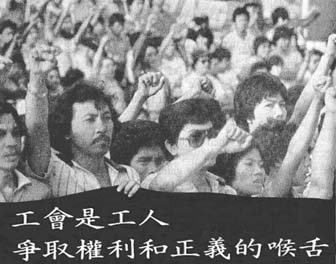
Worker’s rights and justice courtesy: CPP
157
So we discover that we must be careful in the way we interpret Romans 13:1-6. We now know that God does not call people to unconditional obedience. So what is Paul really saying?
It is helpful to look at the historical background to this letter. Paul was not telling people to accept injustice. Paul's experience of the Roman Empire was that it was good for people. It offered stable government and peace. There were people in the New Testament churches who thought that because God was a God of grace and forgiveness, they could do what they liked. When people want to throw out all law, all responsibility, it is right to remind them that we need government.
The God who gives people freedom is not a God of any laws. God is a God of the law, which preserves people's freedoms. God is, if you like, the God of law based on respect for human rights.
When people misuse the idea of law and government to deprive people of human rights, then we should oppose them. We want good law and responsible, just government. But when people .want anarchy, the absence of all law, then we need to affirm the need for law and government as a proper way for ensuring justice for the weak and powerless.
So when people want to be free to do anything they like, no matter if it hurts someone else, read Romans 13:1-6. But when people misuse the law to hurt other people, then read the story of Exodus. They are two sides of one problem, like the two sides of one coin, which look quite different but are part of the one thing.
What is the hermeneutic principle we can derive from all this?
God is never the God who lets defenseless people be killed or deprived of their rights.
158
The God of the Exodus, the God who gives people freedom, challenges all of us. God challenges people who are part of colonial invasion. God challenges people who rely on the "one-talk" system of patronage whereby people in government and the public service give special privileges and high paid jobs to their relatives. God challenges people who support military coups. God challenges anyone who wants to use race as an excuse to treat other people as having less rights.
Some of us should find the God of the Exodus very challenging. This God must be very disturbing to white Australians who want to deny aborigines their rights as indigenous people. But others of us should find this God strengthening as they seek to resist unjust powers.
God does not tell us to be obedient no matter what. Instead, God encourages us to resist all that would destroy life and rights of people.
Suggested Procedures
1. As a Christian, what is your understanding of "obedience in the light of your own context?" Each one may complete the sentence, "For me, obedience is...."
2. Read Romans 13:1-6. What concept of obedience does it imply?
3. Proceed with the rest of the Bible study presentation here.
4. In the light of the biblical teachings used in this Bible study, dramatize the kind of obedience you need to uphold as the church, or the SCM, within your respective contexts.