21
CAUCUSES
Caucuses of women and men separately and together were
deliberately slotted in the programme structure. This was done in the hope that participants
would initiate raising issues and come to grips with questions pertinent to
their daily experiences and socio-cultural conditionings as males and females
whose roles have been defined to them.
During the men's caucus sessions, questions discussed
revolved around these areas: - How men oppress women; what do they feel when
oppressing women; and personal experience of women's oppression. In the course of their discussion, the men
identified some areas of concern for change.
They realised that both men and women used each other as objects. There
is need for change of attitudes between women and men towards each other. This should lead to consequent changes in
culture for new structures and new values of human relationships even in dating
and marriages.
The women's caucus turned out to be a pleasant surprise
though some described it as frustrating and non-directed. In the first session,
most participants were at a loss, groping about for clarity and purpose. Many views were expressed as to the direction
of the sharing/discussion.
When the men's and women's caucuses came together for
sharing and dialogue, it seemed that the men were more eager for open
discussion. Some women said that the big
group was not conducive for personal talk such as the issue of rape. Yet others
perceived that thus far the caucuses have served its good function. It should not however remain a merely
intellectual exercise of analysing the women's oppression within a
male-dominated society. Women and men in
SCMs must begin to create new patterns of human
relationships on personal, social and corporate levels that will reflect the
vision of the new order in the
22
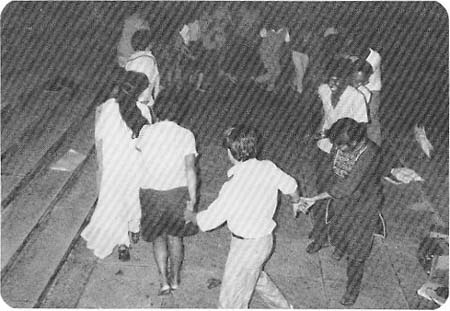
Women's and men's caucuses sharing session in the open air
at the 5th Residential College, University