22
Chapter 2:
BUILDING DYNAMIC FAITH COMMUNITIES
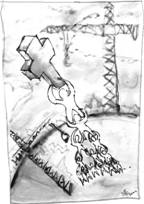
HUMAN CONTEXT
The Christian community is a community among other
communities. In Asia, most of the
Christian communities are in the minority. Generally, they are the product of
the missionary-colonial expansion. As a result many of these Christian
communities in different countries suffer from ‘mission-compound mentality’.
Such a community is usually reactionary and conservative, defensive, apologetic
and sometimes polemical. Such an
attitude and action produce its own reactions.
They become isolated from the larger sphere of life and action. This has been the bane of many Christian
communities across Asia. They want to
live like an ostrich with its head in the sand.
This has resulted in fear and suspicion on the part of other
communities. Such a ‘minority complex’
cannot be congenial towards building dynamic faith communities in Asia.
Such a situation has given rise to open conflicts and
even, violence, such as in India, Indonesia, and Malaysia. Before we blame,
accuse and point fingers at other communities for such opposition it is
necessary that Christian communities and their leaders engage in
self-examination and assessment. How
much are we responsible for such a conflictual
context? Have we expressed solidarity
with the larger issues affecting and afflicting Asia in general and the
particular country? Or are we too
preoccupied with non-issues? Are we
listening and learning from other communities?
Is there mutual respect and understanding? The more fundamental question is how to build
dynamic faith communities in the different countries in
23
which we are located.
In such a dilemma, we need to turn to the Bible and seek guidance. It will not have direct answers to our
modern, Asian predicament. We do not
look for divine directives but for directions that will help us.
OLD TESTAMENT BACKGROUND
The ancient Jewish people were engaged in building and
re-building their community in the midst of plurality of communities. For this
they had to be displaced, had to become refugees but they returned to rebuild
with renewed strength and vigour.
In this painful-joyous process,
God was with them. Their strong faith enabled them to overcome problems and
empowered them to reconstruct. They took
as their pledge, “Let us rise up and build.”53
The ancient Jewish people had done a lot of building
for the Pharaohs in Egypt. But that was
slave labour to build the famous pyramids of
Egypt. Thus they were quite used to
active work and it was this work that kept them together, galvanised
them to further liberating action. Indeed it was a blessing in disguise. In and through this active process they were ever mobilising, organising, grouping and regrouping, themselves
in the midst of their nomadic, wandering life. It was a community around the temple. It was most important for them. It was at one time, the sacred sanctuary of
ancient Israel.
Both Nehemiah and Ezra were busy organising the
community and making sure of its distinctiveness. The people built the wall and the ruined
temple. Ezra also required the Jews to
divorce foreign wives.54 That was an action to keep the ‘purity’ of the community!
Nehemiah was appointed governor of Jerusalem for twelve
years. During this period the wall was
built. Then he engaged in reform in 432 BC when he realised
that the economic and social condition of the people was not good.55 The Persians
______
53 Nehemiah 2:18b and 20 b; Malachi 1:4
54 Ezra 9:9; 10:3ff
55 Nehemiah 13
24
had Jewish children as slaves in payment of debts. Interests
on loans were also being taken. He was
engaged in strengthening, the community by repopulating the city. He took rigorous action against the rich and
stopped Sabbath-trading. But he was also
against inter-religious, interracial, inter-cultural marriage like Ezra’s. But that was thousands of years ago and the
community was, itself broken and fragmented. As tribal communities as well as
an agricultural community, they had their own set of problems under their
colonial masters.
Some positive and negative examples of
community-formation under Ezra and Nehemiah include: Nehemiah 3 for the detail
of the building-work; chapter 4 records the opposition to the building-project
and shows how builders had to become fighters; chapter 8 records Ezra reading
the law of Moses to the people and thus strengthening their faith in Yahweh;
and chapter 9 documents a public confession of sin. Generally, Nehemiah was a staunch defender of
the faith of his ancestors. He wanted
the people to obey and make a promise to follow that faith. He thought that in this way he could unite
the community and build it into a dynamic instrument in the hand of Yahweh.
We find a similar line of thinking in Ezra. He was also concerned about the community and
wanted it to become strong and faithful. This was particularly after their
return from exile in Babylon. This was
the period of restoration and strengthening of their ancient faith. This was the ‘remnant’ that had returned and
their faith had to be fortified. Their
faith gave birth to hope for the future and that became the fundamental basis
of their community-formation. This faith
not only had a past and present but more importantly it became forward-1ooking. This made
their community hopeful and brave. They were not afraid.
APOSTOLIC WITNESS
Peter, Paul, James, Barnabas and many others were
pioneers of the Christian faith. They realised that they had to slowly but surely build the
community, which was in its embryonic state.
At that initial stage, it needed careful nurture
25
and training. For them the first, essential ingredient of an
authentic community is fellowship, koinonia.
Now the company (community) of
those who believed were of one heart and soul, and no
one claimed private ownership of any possessions, but everything they owned was
held in common.56
For them faith and fellowship belonged together.
Christian faith is fundamentally a fellowship creating and enhancing
reality. Jesus had made them relational
and communitarian and thus part of the world around them. This means that they could not be
individualistic, non-relational and otherworldly. I have already referred to their early,
Herculean effort to build an inclusive, open community, characterised
by justice and impartiality. Through a
democratic process at the Council in Jerusalem, the ancient apostles together
decided to remove the obstacle of circumcision.
That was a great step forward.
That ancient koinonia
or community was based on kerygma or
proclamation. We should not think of
this exercise as a one-way, undemocratic process. It was in fact sharing the
good news (gospel) and equipping the people with tools and skills. Paul’s
preaching in Athens was preceded by preparation and observation. He learned about the context and then opened
his mouth to speak to the people. First there was koinonia
or fellowship with the local, ‘non-Christian’ community in Athens and then kerygma took place.
In their sharing of the good news of God in Jesus, they
talked about their community. For this
they used basically four words or phrases, which are relevant for our
discussion. Firstly, the apostles talked about ‘growing into’. They repeat this phrase several times in
different situations. Writing to the Ephesians, the author asserts,
_____
56 Acts 4:32
57 Ephesians 2: 21-22
26
In him (God) the whole structure
is joined together and grows into a holy temple in the
Lord (Jesus); in whom you also are built together spiritually into a dwelling
place for God.57
If we read few more verses of the same chapter we are
struck by the architectural organic metaphors and symbols.58
Thus building a faith community’ is, not only a physical activity, but a
theological-ethical frame of mind, learning to become one in spirit and action.
This building, therefore, is a physical-spiritual phenomenon. Such verses affirm building a faith community
with diversity and difference. The chapter states that we have to break down
the dividing wall of hostility or partition.59 So to build, it is
necessary to break. In another chapter of the same epistle, it is stated:
...to equip the saints for the
work of ministry, for building up the body of Christ until all of us come to
the unity of the faith. . . to maturity, to the
measure of the full stature of Christ.
We must no longer be children, tossed to and fro and blown about...60
There are sufficient instructions in this chapter about
building a dynamic faith community.
Nothing about it is mechanical or conventional. It demands maturity and responsibility. This means it is not an inward-looking
community, which is selfish and aggressive.
On the contrary, an open, inclusive community must respond to or be
sensitive about the real, grassroots, ground-reality.
Such a community must develop richness in thinking and action and tap various
possibilities as suggested by the above verses.
The unity it aspires for the community is not uniformity. It is not a mathematical unit or an
arithmetical one. It is a unity that encourages and promotes plurality of
expressions. The body is one but it has many, many parts. The community of faith in the ancient world
was referred to as “the Body of Christ”. We discover a similar language in the
letter of Paul to the Colossians,
...holding fast to the head, from
whom the whole body nourished and held together by its ligaments and sinews,
grows with a growth that is from God.61
_____
58 There are different translations with slight
variations – “As every structure is aligned on him, all grow into”. (Jerusalem
Bible); “the whole building is bonded together”, (New English Bible); “properly
fitting into his neighbour” - J. B. Phillip).
59 Ephesians 2:14
60 Ephesians 4:12-14a
61 Colossians 2:19
27
Therefore, even when we are attempting to build a
dynamic faith community, we need to be God-driven and God-dependent. It is in
fact human-divine collaboration. It is not God-given and predetermined. The
text is using a biological language to understand the building process-
ligaments (tissues connecting bones) and sinews (source of strength). It is a
gradual growth and evolution and does not happen by fate of fiat.
Secondly, the ancient apostles used the vocabulary of
‘building up’ in several of their letters.
To the Corinthians, Paul wrote, “Knowledge puffs up, but love builds up”62 or again, “the Lord has given me
(authority or power) for building up and not for tearing down”.63
This language is repeated by Paul writing to the Thessalonians, “Therefore
encourage one another and build up each other, as indeed you are doing”.64
These references make us realise that building
a community requires thinking (knowledge and intelligence); feelings (emotion
and devotion); as well as willingness (to act positively on our
commitment). Head, heart and hands have
to be combined to make this possible.65
Thirdly, related to ‘growing into’ and ‘building up’ is
the idea of ‘up-building’, which reflects the quality and character of building
a faith community. ‘The ancient author asserts, “Let us then pursue what makes
for peace and for mutual up-building”66 or
“strive to excel in them for building up the church”.67
Thus building up gives solidity and stability to a community life. It requires
equipment, maturity and responsibility as well as the ‘fullness’ of Christ if
it is to be a Christian community. The
early Christians were actively engaged in community formation. Indeed we have to pattern our community
formation accordingly. It has to be carefully and prayerfully made.
_____
62 I Corinthians 8:l
63 II Corinthians 13:10b
64 I Thessalonians. 5:11
65 The old English for encouraging and building
up is to edify, which has the connotation of education and enlightenment. Some of the other translations of the two
words are helping, cheering, strengthening, hearten, fortify. Indeed building up involves all these
66 Romans 14:19
67 I Corinthians. 14:12b; see also Ephesians.
4:16b
68 Ephesians 2:22; Colossians 2:7; I Peter 2:5
27
Fourthly, the common vocabulary in most of the
apostolic witness is ‘built into’.68 I
have taken these words from the apostolic writings to illustrate their
communitarian thrust. We are indeed
struck by their organic, relational language and life. There was dissension and even division in the
early church community as demonstrated in their epistles. Precisely for this reason, they were
constantly pleading, appealing for their larger, stronger and stable
unity. In the final analysis, the
community must be rooted and grounded in Christ, not in a narrow, exclusive
sense but for the larger cause and commitment.
GOSPEL TRUTH
After thirty years of prayer and preparation Jesus
commenced his ministry. He did not do it all alone by himself. From the beginning, Jesus began to build a
faith community. He formed a core group of twelve, which was a nucleus.
Obviously, this core did not or was not allowed to become obsequious or a
coterie of Christ. One was a member of
the Zealot Party, Judas Iscariot, who betrayed Jesus, hoping that he would be a
political messiah. Another, the beloved
disciple, Simon Peter denied Jesus three times while Thomas entertained a
serious doubt about the value and, veracity of Jesus. James and John had their own ‘hidden agenda’
to follow Jesus. But they were exposed
and condemned.69 Such was the
scenario of the early Christian community. They took a long time to learn the
nature and purpose of the community that Jesus was shaping. Their stereotype and straightjacket thinking
did not work.
What is clear from the ministry of Jesus is that as
much at he was interested in and concerned about individual followers, his
basic message was about the KINGDOM OF GOD.
There is no uncertainty or ambiguity about this. Jesus came to show us
the community of God-fearing people, what it should be like? What are its goals and functions or its
nature and content? So when we are
thinking of building a faith-community, we must base it on kingdom values and
vision, kingdom ideas and ideals as enunciated by Jesus himself. All the four gospels testify to it very
powerfully and effectively. We cannot
miss it.
_____
69 Mark l0: 35-45
29
Mathew’s gospel was interested in the messianic
kingdom. In the context of the Kingdom of God, Jesus talks about the hungry,
thirsty, the naked, the stranger, the prisoner and the sick and affirms,
‘Truly, I tell you just as you did it to one of the least of these who are
members of my family, you did it to me.’70 Translated into our
modern language, it would imply socio-economic political action, leading to
justice and liberation. This means in
our time, structural-systemic changes that will make people independent and
self-reliant. Such is the radical
requirement of a dynamic community in formation71 .
In the Mark’s narratives, the references to the kingdom
are brief and comprehensive72 but the
divine demand and direction is explicit. It is compared to a small seed particularly,
a mustard seed which is very small but has tremendous potential. Thus the kingdom is given in its seminal
embryonic form; ultimately it is what we make of it.
In the Luke’s version of the gospel, there are similar
verses about the kingdom. The writer
mentions about the gospel of the kingdom73.
So also he mentions, ‘Seek first the kingdom of God and these things (worrying
about food and clothing), will be given to you as well.’74
We must first decide our priority, perspective and
proper balance in life. Then we can go
about building. We should pay heed to
this warning. The community that we are
striving for has to be material-spiritual; human-divine;
religious-secular-democratic. That
indeed is the challenge. 75
Finally, in the narration of John, there is a unique
addition. It is not found in the
synoptic gospels. Jesus asserted;
Truly, truely,
I tell you, no one can see the kingdom of God without being born from above
(anew)...unless one is born of water and the spirit; he cannot enter the
kingdom of God.76
_____
70 Matthew 25:40
71 There are other texts in Matthew about the
kingdom for example Matthew 3:2; 5:3,10,19-20; 6:33;
9:35; 24:14; 19:23-24.
72 For example Mark 1:15; 3:24; 4:11; 9:1,47;
10:14-15; 23-25; 11:10
73 Luke 8:1
74 Luke 2:31
75 Luke also uses parables for the kingdom: Luke
13: 18, 20; 14:15-24.
76 John 3:3,5.
30
This is a prerequisite for a faith-community. This born-again experience is much used and
abused phenomenon in the life of the historical church. According to Jesus, this is conversion,
repentance, metanoia. It is a radical reorientation of life and
action, displacement of existing outlook and reversal of values. It is not an experience of having a monopoly
on Jesus and making him one’s private property.
It is not an individualistic, non-relational, anti-world
experience. But
becoming a theological-ethical member of a dynamic community of people under
God in Jesus. It is not an exclusive experience but opens one up to the
energy and Power of God who can ‘move mountains’ and ‘turn the world upside
down’. 77
THEOLOGICAL-ETHICAL AFFIRMATION
Building a dynamic faith community is a venture and an
adventure. It is an exciting exercise
undertaken by committed people, inspired and challenged by God. In Asia this is a tremendous responsibility.
Many of our communities are characterised by caste,
tribalism, fundamentalism and narrow-mindedness. We are prone to live in homogeneous,
monolithic, in-grown communities. But
the God of the Bible calls us to larger, inclusive, heterogeneous, pluralistic
communities. We have to express
solidarity and be at one with the stream of life and not be withdrawn and
escape from real reality in the name of religion. In the Old Testament, the ancient Jewish
people did misunderstand the ‘chosen’ character of their community. It was conceived in terms of privilege and
power and not in terms of sharing and caring.
God had to reveal through their seers and sages the authentic nature and
quality of a God-fearing community. They
had to learn slowly but surely.
In the New Testament, we find Jesus calling his
immediate disciples, to the vision of the kingdom of God. Such a community is
open-ended and free and liberated from clericalism, consumerism, patriarchy and
hierarchy. Such a ‘kingdom’ is not to be
confused with Christendom or feudal structure. Faith community must be founded
on justice, equality and love as demonstrated in the Bible in general and by
Jesus in particular. It must transcend sociological conditioning and aspire to
be a
_____
77 Matthew 17:20-21; Acts17:6b
31
powerful theological-ethical community.
Thus, according to the Bible, God calls us to be a community, having communion
among ourselves and working actively for the larger unity of humanity. We have no reason in Jesus to be parochial
and myopic in our community-building effort.
QUESTIONS FOR GROUP DISCUSSION
Is the Church or
the Christian community in your country an alternative to the dominant
community? Why yes or why no?
What can the
Church or the Christian community in your country do,
to bring about necessary ethical changes to the larger whole?
How can the
Christian community and the secular society in your country work together to bring
about much-needed socio-economic-political transformation?
FIELD STUDY
Make a thorough study of a small, local community, may
be in a village. Find out the exact
nature of their work, the working conditions, wage differences, gender and age
ratio, etc. How do they relate economics
to ethics? What are the difficulties and problems they face? What are the compulsions and constraints? Do they enjoy full freedom in terms of their
choice for career, education, employment, marriage etc?
QUOTATIONS FOR PERSONAL AND GROUP
REFLECTION
Christianity contributed to the rise of the modern
world. The modern world in turn, undermined Christianity. Christianity has become its own
gravedigger. There is complete neutralisation of the modern Church by subversion from
within. Christianity is now becoming
captive to the very modern world it helped to create. The philosophical strength of Christianity lies
in its claim to truth, whereas the social strength of Christianity, on the
other hand, lies in its challenge to tension.
Most
32
Christians have no trouble in seeing themselves as
‘believers’. They may be vague about
what they believe, and vaguer still about why they believe, but they
believe. Few have looked into the deeper
dimensions of the nature of believing.
Church’s preoccupation with credibility (an intellectual problem) and
neglect of plausibility (a problem with social dimensions as well) is typical
of her witness. Without a feel for the
social dimension of believing, the Church is like a person paralysed
from the neck down.
How wild is the Bengal tiger in the wildlife park? How wild is wildlife in captivity? There is a taming of religion in the modern
world, amounting to a private preference, a spare time hobby, a leisure pursuit
- domesticating the untameable world of the
spirit. Modernisation
produces a cleavage between the public and the private spheres of life and
focuses the private sphere as the special arena for the expression of
individual freedom and fulfilment. People switch convictions as easily as
television channels. Individuals are
free to build a world of their own to their hearts content - so long as they
rock none of the boats of the real world. The weakness of the charismatic
movement is not that renewal starts in the private world, but that it ends
there too. It is privately engaging but
socially irrelevant. ‘Jesus is Lord’,
they may declare but what do they demonstrate?
Little better than a spare-time faith and a pocket
discipleship. The once wild
animal may roar, but safely behind bars.
REFERENCES
Bellah, Robert “The Role of the Church in
a Changing Society”, in Currents in the Theology and Mission,
June 1990.
Christian Conference of Asia, (EACC)
Christian Community within the Human Community, Hong Kong. 1964
33
Gustafson, James, M., Treasure in Earthen Vessels:
The Church As a Human Community, 1961
Guinness, Os, The Gravedigger File: Secret Papers on-the Subversion of the Modern Church, London: Hodder and Stoughton, 1983