9
Presentation I
NEW ECUMENICAL VISION
IN
A Biblical and
Theological Perspective
Kim Yong Bock
The Ecumenical movement in Asia has inherited various visions, some of
which developed in Asia and some of which came from the outside of
These visions of the world have their distinct universal claims, which
are linked to socio-economic relations, political structure and
religious-cultural values, and the powers of the Empires impose these upon the
Asian peoples. It is in this historical context that we are searching for a new
ecumenical vision in
I. THE CONTEXT OF THE PEOPLES IN ASIA
The powers and principalities are the realities of
* Sukarno's PANCHASILA, Nehru's NATIONALISM are some of these examples
also.
10
complex interactions and contradictions in the
reality of the Asian peoples. To list a few important realities, the first is
the vision of Pax Americana and another is Pax Russiana. In between, there are
a number of national developments which carry their vision of the world from
their national and ideological perspectives. Often these variations of the
vision of the world are related to the larger global and "imperial"
visions of the superpowers, which advocate the capitalist and communist
ideologies respectively.
The context of the peoples in
In the midst of these political and religious visions a new and forcible
vision of the world is emerging and being intertwined with the present visions
of major competing ideologies. It is The Scientific and Technological Vision of
the world, which is being manifested as the so called information society and
new media. In a sense, this vision has penetrated the world powers and
industrialised and industrialising societies with great speed. It is beginning
to make great impacts on the peoples in
Here we cannot analyse in full the complex contours of
Coe of the truths of the reality is that these visions of the world are
not universal visions as they claim to be; rather/ they are often visions of
the powers and principalities imposed upon the people; and often the visions of
the people are suppressed. We will have to answer our ecumenical questions in
relation to this basic and fundamental reality.
Thus, we embark on our thinking with the vision of the people, not with
the visions of "the powers and principalities." We are not speaking
of the visions that are
11
forged for the people, or that are designed to
save the people. We are talking about the visions of the world that the people
themselves have been envisioning out of their experiences.
This requires analysis of the objective realities of
II. CHRISTIAN EXPANSION IN ASIA
Christian expansion movements in Asia can be described historically in terms
of the early period of various orthodox churches and other churches, the Roman
Catholic phase, and the era of the Protestant Missionary in
The Protestant Missionary Movements in
12
Western Christiandom was imposed. The
theologies and the Christian trappings were concrete manifestations of Western
Christiandom in all its variations and nuances. We do not like to admit this
analysis as Christians and Christian churches in
The theologies of the Christian Movement are also those of Western
Christiandom, formulated for Western Christians. Therefore, these theologies
did not and could not deal with Asian issues such as Asian religious-cultural
identity, political independence, and socio-economic poverty. In fact, the
theologies of the churches in Asia have failed to give adequate responses to
these fundamental questions of the peoples in
III. ECUMENICAL MOVEMENT IN ASIA
The modern ecumenical movement in Asia was set in the revolutionary
situations of the
The organized ecumenical movements such as the World Student Christian
Federation and the Christian Conference of
13
nation-states and developing modern industrial
economies. The key historical issues have been those of national
self-determination, nation building, modernization and development, social
transformation and revolution.
Daring this period the ecumenical agenda was a response to nationalism,
resurgent indigenous religions, and socio-economic development. Issues of
Church and State, dialogue with other faiths and encounter with social
revolutions were very important questions that the ecumenical movement in
During this period of revolutionary situation, different ideologies,
foreign and indigenous, were experimented with and tested to meet the demands
and aspirations of the Asian peoples. This process is still going on. There is
a growing sense that these existing ideologies and their visions of the world
are not sufficient to meet the historical demands of the peoples in
In the same period there also have been explorations into the
traditional religious and cultural resources which are available to meet the
challenges of the times. So far, no major religion in Asia today has provided
any exciting vision for the peoples in
Recently in
In this situation the Asian ecumenical movement has begun to discover
that the peoples in
14
IV. FAITHS OF THE PEOPLE MOVE
MOUNTAINS
What really matters is the faith of the people that can move
"mountains" in history and the vision of the people that defines
their own destiny in
The stories of the peoples in
In the first place, we made the statement that the stories of the
peoples in
In the second place, the faith of the people entails their vision of the
new heaven and the new earth. People with faith in the premise of God envision
the future and the future is concretized into sceneries of the movement toward
the vision.
In the third place, the faith of the people overcomes the "bad
faith" and the mystification of faith of the dominant powers.
Finally, the visions of the people are enormous source of social and
political imaginations with an ever-widening horizon and with a deeply
penetrating power that subverts the Imperial "visions".
In
15
captives of the Imperial world-view. For us,
the popular religions are of particular interest in this connection; thus, the
study of Minjung religions by the Minjung theologians in
The messianic vision is an integral part of the people's movement for
liberation. Thus, the faith of the people is the motive power to transform the
existing world into a new vision that comes from the future.
V. THREE VISIONS:
VISIONS OF THE PEOPLE, IMPERIAL VISIONS AND VISION OF JESUS CHRIST (Messianic
Vision)
Here we are trying to relate these three sets of visions. Our task is to
clarify the Messianic vision in relation to the other two sets of visions.
We are not going to enlist traditional theological questions of Christology,
as to what is the nature of Christ, as the western churches have been doing.
Rather, we will reflect upon salient biblical materials for our purpose.
The context in which Jesus lived and suffered and envisioned the future
of the world was the
The Gospel according to Mark tells three times of Jesus' prediction of
his own suffering on the cross; same as the story of the Suffering Servant told
by the Second Isaiah (chapter 53).
Paul introduced the early confessional hymn in the letter to the
Philippians describing Jesus Christ as the crucified slave. This Suffering
Servant is the story of the people that has emerged during the Babylonian
exile. It is the same story of the people of God under the Greek Empire. This
story goes back to the story of the Hebrew slaves.
In the story of the suffering of the people of God (the suffering
Servant), the promise of God for the exodus and its resultant blessings –
socio-economic security and prosperity, justice over the oppressive powers for
the poor and Shalom on the whole of earth – finds its reality. The faith of the
people in the promise and power of God become
16
the essential constituent factor in the story
of the Suffering Servant - that is, the people of God.
Faith of the people in God works in the Exodus, defeating Pharaoh. Faith
of the people works in the prophetic movements to advocate the rights of the
poor and to protest against kings, who follow the ways of the Empire. It is the
faith of the people of God who are expecting the coming Messianic age in the
midst of the oppression of the Empire of Rome,
Concretely the faith of the people in God (Exodus) brought about the
covenant among the people of God to protect the rights of the poor, powerless
and weak. (Exodus 21:1 - 23:23 is the covenant code). This covenant has been
reconstituted in the history of the people of God/ when it is broken by the
people of God. The covenant of the people with God manifests itself as the
covenant with the poor. (See Kim Yong Bock, Covenant with Minjung, in
Ecumenical Review, 1986)
When the covenant was broken and trampled down by the Empires and its
cohorts/ the new covenant had to be mediated through the sacrifice and
reconciliation.
Prophetic movements protest against the powers that break the covenant;
and the priestly movements bring about reconciliation and peace through paying
the cost, that is, through sacrifices. This movement of reconciliation and
peace culminates in the sacrifice of the Lamb, who is the Prince of the Peace.
(Hebrews 8) This peace is not between the powers that create jungles and
suffering people, but between God of justice and peace and the people, who are
the victims of the Imperial powers.
This means the overthrow of the regimes and empires of the jungles, and
the taming of the Leviathans into play animals.
The covenant is entailed by the visions of the suffering people, who
have faith in God who promised shalom for them. Visions of the Suffering
Servant and Suffering People of God emerge out of the ashes of the broken
covenant. When the Empires of Egypt,
17
These visions are told in terms of the
The vision of the Garden of Eden is the overcoming of the chaos and
darkness of the Babylonian jungle; the vision of the Exodus people is the
socio-economic security which is the overcoming of slavery in Egypt; the
messianic vision of the people of Israel in Isaiah II is the vision of shalom
that overcomes the invasion, exile and war of jungle; and the Messianic vision
in Revelations 21 is that of the New Heaven and New Earth, in which the
Messianic banquet of all peoples and nations will be enjoyed in the New
Jerusalem, the eschatological city of Shalom and this Jerusalem overcomes the
Roman Leviathan.
Four inter-related components in these visions may be discerned:
1) The
faith of the people is translated into covenant with the poor, which means the
protection of the poor in terms of their socio-economic security and rights.
2) The
faith of the people brings about the sharing of life, koinonia of life, which
means not only the sharing of things (Act 3.4.5), but the life itself. This is
the koinonia of joy and pain, the communion of suffering among God and the
people.
3) The
faith of the people is an active expectation of the Cosmic (New Earth and New Heaven)
Shalom of the New Age.
4) Faith
of the people affirms their religious, ethnic and cultural subjectivity and
identity. All nations (Goyim and Ethne) are to participate in the Messianic
Banquet.
The suffering of Christ in the crucifixion under the
18
VI. MISSION
OF CHRIST IN ASIA: SUFFERING MESSIAH AMCMG TOE PEOPLES IN ASIA
THEMES OF FAITH OF THE PEOPLE IN THE INCARNATE
GOD, WHO IS THE SUFFERING SERVANT, OF GOD'S COVENANT WITH THE POOR AND CHRIST'S
MEDIATION OF THE NEW COVENANT, AND OF THE MESSIANIC VISION OF UNIVERSAL SHALOM,
ARE ALL CRISTOLOGICAL REFERENCES. HERE WE WOULD LIKE TO STATE THAT THE
THEOLOGICAL FOUNDATION FOR THE ECUMENICAL MOVEMENT IN ASIA SHOULD APPROPRIATELY
BE "THE
There are several reasons for this proposal. The first is the biblical
one. The faith of the people of Christ Jesus in the early Christian Community
is in the crucifixion and resurrection of Jesus Christ. We need to liberate
this confession of faith front the Imperial vision and restore its power.
The second is that the messianic movements of the people are faith, movements
for liberation from the Empires of the past and present world. This fundamental
reality has been emerging in
The third is that our ecumenical movement can be most strongly based in
the confessioning faith of Jesus the Messiah of the peoples in
The Theology of the "
* In this
theology Jesus was tended to be depicted as a revolutionary Zealot.
19
At the same time the traditional Western Christology did not allow into
theology and praxis of Christian Community the full incarnate God - Christ as
the Suffering Servant who had communion with the suffering people. The Kenosis
Christology (Phil. 1-2) had often been outright rejected, in spite of its early
origin.
The question is as classical and basic as the Christian Faith itself.
How do the people confess Jesus the Messiah who suffered among the people, was
crucified and who overcame the power of death in history? How does this
confessing faith of the people move the "mountains" in history?
Today, the Ecumenical Movement is a Movement of Confessing Community of
Faith in Jesus the Suffering Messiah of the Peoples in
Then what are the tasks of the Ecumenical Movement in
1) The
ecumenical movement means the Koinonia and Covenant with the peoples in
2) The
faiths of the people move the "mountains" in history. How do these faiths
of the people become reality in a concrete situation? Faith movements of the
people for Liberation?
3) Let
the Vision of the People of faiths overthrow the imperial ideologies. What does
this mean for the ecumenical movement in the ideological struggles of the
people in
4) What
are the disciples required to do for the ecumenical movement to meet the
challenges of the Asian people?
These may be some of the basic questions for our ecumenical movement in
20

Bishop La Verne Mercado
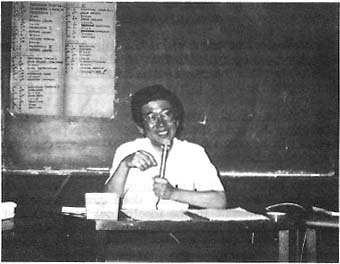
Dr. Kirn Yong Bock